

-

 Meatdryer Artisan KitMeatdryer Artisan Kit
- Regulärer Preis
-
CHF 195.00 - Regulärer Preis
-
- Verkaufspreis
-
CHF 195.00
Schnellansicht
-

 Zubehörhaken zum Aufhängen von FleischZubehörhaken zum Aufhängen von Fleisch
- Regulärer Preis
-
CHF 20.00 - Regulärer Preis
-
- Verkaufspreis
-
CHF 20.00
Schnellansicht
-

 Fliegenschutznetz für Fleisch und WildbretFliegenschutznetz für Fleisch und Wildbret
- Regulärer Preis
-
CHF 30.00 - Regulärer Preis
-
- Verkaufspreis
-
CHF 30.00
Schnellansicht


Was da drinnen passiert
Zwei Prozesse laufen gleichzeitig, und nur einer davon ist willkommen.
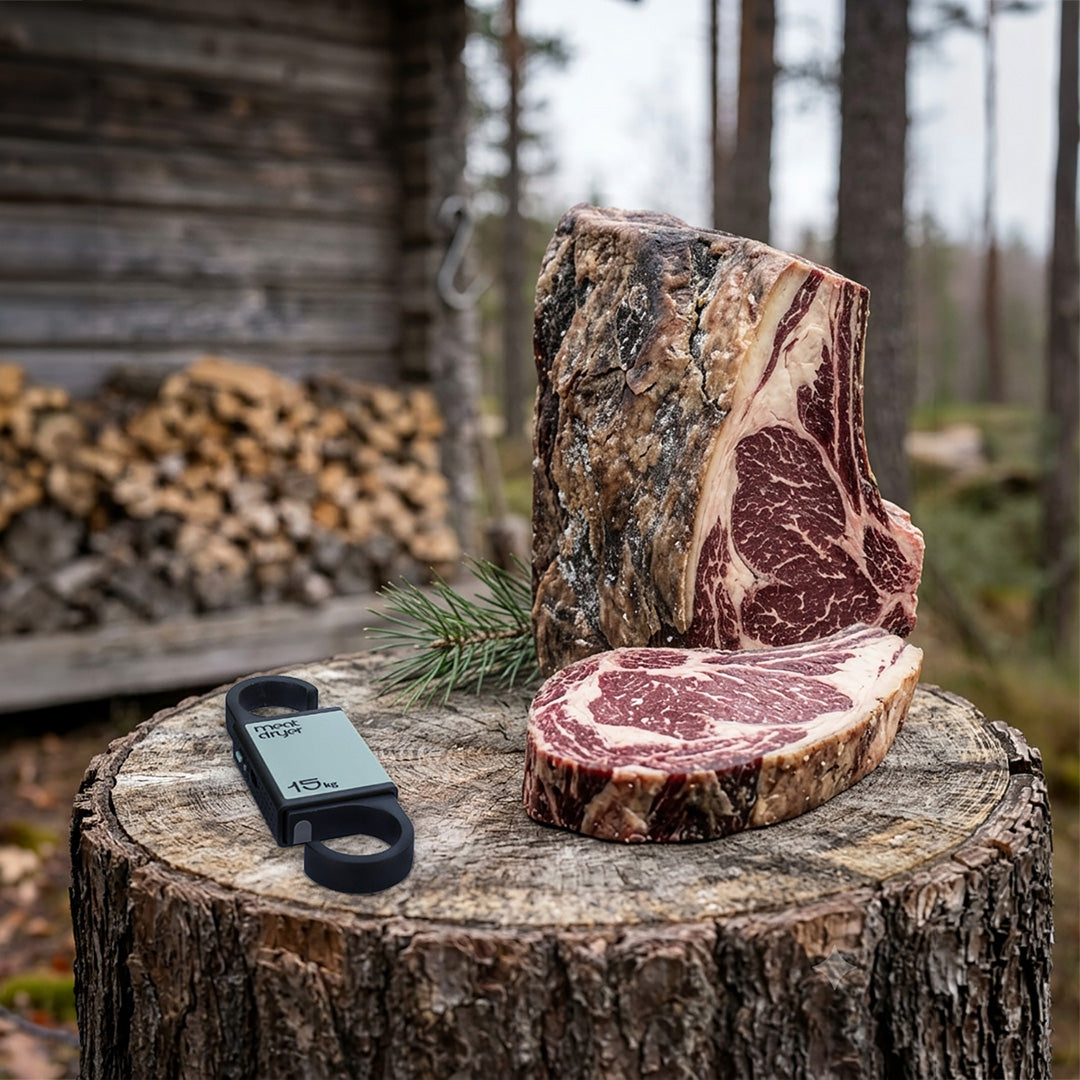
Der gute sind die eigenen Enzyme des Fleisches – Calpaine und Cathepsine –, die in aller Ruhe die Muskelfasern auseinandernehmen. Das ist die Zartheit. Daneben verlässt Wasser die Oberfläche, und alles, was das Fleisch nach sich selbst schmecken ließ, bleibt in weniger Fleisch zurück. Das ist die Tiefe, die Leute fleischig nennen, oder nussig, oder einfach mehr.
Der unerwünschte sind Bakterien, die das Fleisch verderben. Kälte, bewegte Luft und sauberes Arbeiten halten die beiden auseinander, und deshalb achtet jeder, der das macht, auf die Bedingungen.
Die Außenseite trocknet dabei zu einer harten Kruste. Die wird am Ende weggeschnitten und kommt nicht als Steak zurück – deshalb fängt Dry Aging mit einem großen Stück an, und deshalb lohnen sich einzelne Steaks nicht. Es bliebe nichts übrig.
Wie lange es dauert, hängt vom Tier und vom Teilstück ab. Reh ist nach ein paar Tagen fertig; ein gutes Stück Rind braucht Wochen und belohnt das Warten. Jedes Rezept in der App hat sein eigenes Ziel – in Reifetagen oder Gradtagen, je nachdem, was du lieber verfolgst.
-
Etwas Kaltes
Ein normaler Kühlschrank schafft das locker, und das benutzen die meisten. Ein Keller oder ein Schuppen tut zur richtigen Jahreszeit dasselbe, und ein Kühlraum ist besser ausgestattet als jeder Reifeschrank, den du kaufen könntest. Wichtig ist, dass die Kälte stabil ist – nicht, woher sie kommt.
-
Luftfeuchtigkeit im richtigen Bereich
Die Sache, die Leute erwischt, denn sie geht in beide Richtungen schief. Zu feucht, und die Oberfläche trocknet nie. Zu trocken, und sie härtet aus, bevor innen irgendetwas passiert ist. Ein Kühlschrank neigt zum Trockenen, ein Keller zum Feuchten – und keins von beidem lässt sich beheben, wenn du es nicht siehst.
-
Luft, die sich um das Fleisch bewegt
Genug, dass die Oberfläche trocknet statt zu schwitzen. Das Fleisch aufzuhängen statt es auf ein Blech zu legen erledigt das meiste davon von allein, weil die Luft an jede Seite kommt. Ein kleiner Ventilator macht den Rest, und ein Gitterrost schlägt ein geschlossenes Blech.
-
Etwas zum Aufhängen
Lebensmittelechte Fleischhaken, immer. Die meisten Teilstücke hängen an einem kleinen Edelstahlhaken wie dem Zubehörhaken. Ein ganzes Tier ist eine andere Aufgabe – starre Haken, eine Schiene und ein Flaschenzug.
-
Einen Weg zu wissen, wann es fertig ist
Das Einzige der fünf, das wir machen, und das Einzige, das je schwierig war.
Wo du es aufhängst
Ein zweiter Kühlschrank für Dry Aging ist die übliche Antwort und die einfachste. Nichts umzubauen – der Haken hängt an einer Rostschiene oder einer Stange, alles andere passiert in der App.
Der Kühlschrank, den du täglich benutzt, ist der, von dem dir alle abraten, und sie haben einen guten Grund: Der Thermostat ist ungefähr, die Tür geht den ganzen Tag auf, und du weißt nicht, was beides mit dem Fleisch gemacht hat. Das stimmte. Genau das hat sich geändert – du siehst die Ausschläge jetzt, und ob sie etwas ausgemacht haben.
Ein Keller oder eine ungeheizte Garage ist, wie das lange vor Kühlschränken gemacht wurde, und zur richtigen Jahreszeit ist es das immer noch. Er hält die Feuchtigkeit besser als ein Kühlschrank und die Temperatur schlechter, driftet also in die andere Richtung. Überall, wo es nicht dicht ist, häng auch das Fliegenschutznetz auf – halte es frei vom Fleisch und vom unteren Teil des Hakens, sonst legt es sich auf die Gewichtsmessung.
Ein Kühlraum oder eine kalte Kammer ist, wo ganze Tiere hängen, und der ist ohnehin besser ausgestattet als jeder Haushaltskühlschrank.
Ein Weinkühlschrank hält die Kälte gut und bewegt sehr wenig Luft. Aufhängen hilft. Vollstopfen nicht.
Richte irgendetwas davon ein, und du hast das, was Leute mit einem Reifeschrank meinen. Das ist keine Maschine – das ist ein kalter Raum mit etwas darin, das hängt, und etwas, das misst.
Reifeschrank kaufen oder selber bauen?
Ein dry aged Schrank ist eine schöne Sache, und viele hätten gern einen – aber du brauchst keinen, um anzufangen, und du brauchst keinen für ein gutes Ergebnis. Ein Kühlschrank, den du schon hast, gibt dir die Kälte und den größten Teil der Luftbewegung. Was ein Schrank dazugibt, ist Kontrolle über die Luftfeuchtigkeit. Was keiner von ihnen dazugibt, ist ein Weg zu wissen, wann das Fleisch fertig ist.
Ein Schrank kauft Bequemlichkeit, und ein Reifeschrank gebraucht ist der günstige Weg auf diese Route – nur sagt auch der dir nicht, wann das Fleisch so weit ist. Einen Reifeschrank selber zu bauen kauft Kontrolle: ein Hygrostat und ein Luftbefeuchter halten den Bereich besser als ein Kühlschrank allein. Einen Kühlschrank umzubauen, den du schon hast, kauft weder noch, und muss das meistens auch nicht: Was er braucht, ist, dass du siehst, wo er gelandet ist.
Ein Reifeschrank für Fleisch
Ein Schrank, den du selber baust
Der Kühlschrank, den du hast
Am meisten, mit Abstand – du kaufst einen Kompressor zweimal
Teile, und die läppern sich
Was du ohnehin ausgegeben hast
Einstecken
Ein Hygrostat, ein Luftbefeuchter, ein Ventilator und ein paar Wochenenden
Nichts zu bohren, nichts umzubauen
Stellfläche, für eine Maschine, die eine Sache macht
Die Wochenenden, und niemanden zum Anrufen, wenn er zickt
Engere Kontrolle der Luftfeuchtigkeit, und der Kühlschrank macht nebenbei einen anderen Job
Nein
Nein
Nein
Woran du merkst, dass es fertig ist
Das ist der Teil, bei dem es früher darauf hinauslief, die Tür zu öffnen und sich eine Meinung zu bilden.
Trockenreifung – Dry Aging – lief schon immer über drei Dinge: Temperatur, Luftfeuchtigkeit und Zeit. Der Meatdryer liest alle drei durchgehend und verfolgt sie gegen das Rezept, das du gewählt hast. Darauf bauen Reifetage und Gradtage auf, und es funktioniert, egal was du aufhängst und wie schwer es ist. Häng den Meatdryer nah ans Fleisch, dann liest er die Bedingungen, in denen das Fleisch tatsächlich hängt.
Bis 15 kg kann das Fleisch am Meatdryer selbst hängen, und dann kommt eine vierte Größe dazu: das Gewicht. Der Gewichtsverlust ist das eine Maß, das du nicht durch Ansehen, Riechen oder Drücken beurteilen kannst, und bei einem Teilstück macht er aus einer guten Schätzung eine fertige Antwort.
Er meldet auch Abweichungen. Statt dich mit einer Zahl allein zu lassen, zeigt er, wie weit Temperatur und Luftfeuchtigkeit von dem weggelaufen sind, was das Rezept verlangt – so merkst du, dass ein voller Kühlschrank ausgetrocknet ist oder der Keller feucht wurde, solange sich noch etwas machen lässt.
Und du musst nicht danebenstehen. Über WLAN misst und meldet der Meatdryer von selbst, ein Stück im Keller ist also etwas, das du am Handy nachsiehst – und wo es kein WLAN gibt, misst er weiter und synchronisiert aufs Handy, sobald du das nächste Mal in der Nähe bist.
So oder so arbeitet er als Trockenreife-Timer, verfolgt das Ziel des Rezepts und zeigt dir, unter welchen Bedingungen er dort angekommen ist. So wird aus einem guten Ergebnis eines, das du wiederholen kannst, statt eines, bei dem du Glück hattest.
-
Dry Aging
Kälte, Luft und Zeit, die auf ein ganzes Teilstück oder ein ganzes Tier wirken. Nichts kommt dazu. Darum geht es auf dieser Seite.
-
Pökeln und Trocknen – salzen, dann trocknen
Fängt mit Salz an, meist mit einer Gewürz-Salz-Mischung, bevor überhaupt etwas aufgehängt wird. Salami, Pancetta, Coppa, ein ganzer Schinken. Gemessen wird genau gleich – hängend in kalter, bewegter Luft, verfolgt gegen ein Ziel –, und deshalb schafft derselbe Haken beides, und deshalb ist eine hängende Salami dieselbe Aufgabe wie ein ganzer Muskel, der zum Trocknen hängt.
-
Eine Biltong-Box
Arbeitet warm und schnell an dünnen Streifen, mit einem Ventilator, der Luft darüber schiebt. Anderer Prozess, anderes Ergebnis.
-
Ein Dörrautomat
Gibt dünnen Scheiben Hitze, bis sie Jerky sind. Gutes Gerät dafür, schlechtes für alles darüber, weil Hitze genau das ist, was Dry Aging nicht will.
-
Rind
Da ist der Unterschied am deutlichsten, und dafür wird die meiste Dry-Aging-Ausrüstung verkauft. Jeder dry aged Schrank auf dem Markt existiert dafür. Ein ganzes Teilstück statt Steaks – eine gut marmorierte Hohe Rippe oder ein Roastbeef, ein paar Wochen gegeben, kommt mit einer Kruste und einer Geschmackskonzentration vom Grill, die ein frisches Steak schlicht nicht erreicht. Je besser die Marmorierung hineingeht, desto mehr ist zu gewinnen.
-
Wild
Die ältere Version desselben Handwerks. Wenn du selbst aufhängst, machst du es längst, meist indem du Tage zählst. Der Meatdryer ändert die Methode nicht; er übernimmt das Zählen. Ein Teilstück, oder ein ganzes Tier an der Schiene – Hirsch, Wildschwein, Elch, Lamm, jedes mit seinem eigenen Ziel in der App, weil sie sich wirklich unterscheiden.
-
Wurst und Schinken
Salami, Pancetta, Coppa, ein ganzer Schinken – die fangen mit Salz an, bevor etwas aufgehängt wird, und das macht sie zum Pökeln und Trocknen statt zum Dry Aging. Alles nach dem Salz ist dasselbe: hängend in kalter, bewegter Luft, verfolgt gegen ein Ziel, fertig, wenn die Zahlen es sagen. Derselbe Haken schafft beides, und dorthin gehen die meisten als Nächstes.
Häufige Fragen
Welchen brauche ich?
Der Meatdryer Hook ist der zum Anfangen – er macht die ganze Arbeit allein. Das Artisan Kit ist die Premium-Version: dieselben Messungen, im braunen Haken, mit einem Zubehörhaken zum Aufhängen des Fleisches und einer Werkzeugrolle für alles zusammen.
Gibt es eine Gewichtsgrenze?
Nicht für die Nutzung. Der Meatdryer verfolgt Temperatur, Luftfeuchtigkeit und Zeit, egal was du aufhängst – für eine Hälfte oder ein ganzes Tier hängst du das Fleisch an starren Haken an eine Schiene und stellst den Meatdryer daneben. Bis 15 kg kann das Fleisch am Meatdryer selbst hängen, und dann wird auch der Gewichtsverlust verfolgt.
Brauche ich einen Luftbefeuchter?
In einem selbstgebauten Schrank meistens ja – das ist der größte Teil des Baus. In einem Kühlschrank oder Keller fang ohne an. Es geht nicht darum, die Luftfeuchtigkeit ab Tag eins zu steuern, sondern zu wissen, was sie macht: Ein Kühlschrank neigt zum Trockenen, ein Keller zum Feuchten, und bevor du siehst, wohin deiner neigt, behebst du ein Problem, das du nicht gemessen hast.
Was, wenn ich keinen zweiten Kühlschrank habe?
Ein Keller, eine ungeheizte Garage, ein Kühlraum oder ein Weinkühlschrank tun es alle. Worauf es ankommt, sind Kälte, Luft und ungestört hängen zu dürfen – und der Haken zeigt dir, ob der Ort, den du gewählt hast, das auch liefert.
Muss ich den Kühlschrank umbauen?
Nein. Nichts zu bohren, nichts zu verkabeln, nichts, was die Garantie berührt.
Brauche ich das Fliegenschutznetz?
Nur, wenn du irgendwo aufhängst, das kein dichter Kühlschrank ist – ein Schuppen, eine Garage, ein Keller, draußen.
Funktioniert das für Wild?
Dafür nutzen es viele unserer Kunden, ob als Teilstück oder als ganzes Tier an der Schiene mit dem Meatdryer daneben. Die App hat Ziele pro Tier und Teilstück.
Reifetage, Temperatur und Luftfeuchtigkeit — gemessen dort, wo das Fleisch wirklich hängt.